Shopping Cart
Your cart is empty
Total: EGP 0


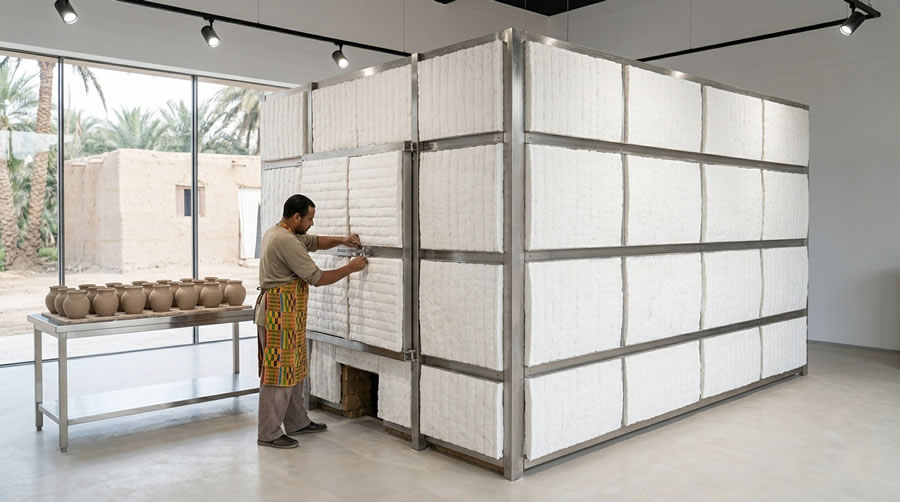
Here's a test. Next time your kiln is firing, put your hand near the outside wall. Does it feel hot? Warm? If you can feel significant heat radiating from the outside of your kiln, you're wasting energy. That heat should be inside the kiln, firing your pottery. Instead, it's escaping through inadequate insulation, heating your studio instead of your work. The Ceramic Fiber Blanket 2.5cm solves that problem. It's high-density, high-temperature insulation designed to keep heat where it belongs—inside your kiln.
Let's talk about what poor insulation costs you. Every BTU of heat that escapes through your kiln walls is electricity you paid for but didn't use to fire your pottery. Your kiln has to work harder to reach temperature. Your elements run longer, wearing out faster. Your firing cycles take more time. Your electricity bill is higher than it needs to be.
A kiln owner in Cairo who upgraded his old kiln with ceramic fiber blanket told me: "I didn't realize how much heat my old kiln was losing until I felt the outside during a firing. It was hot. Not warm. Hot. After adding ceramic fiber insulation, the outside stayed cool to the touch. My firing times dropped by about 20%. My electricity bill dropped by even more because my kiln wasn't fighting constant heat loss."
That's the difference good insulation makes. Shorter firing times. Lower electricity bills. Longer element life. The insulation pays for itself.
The math is straightforward. If your kiln fires 200 times per year and each firing takes 20% less time after insulation, you've saved 40 firing-hours annually. At typical electricity rates, those savings add up quickly. Most kiln owners recoup the cost of insulation materials within the first year.
Traditional kilns use firebrick for insulation. Firebrick works. It's been used for centuries. But it has limitations. Brick is heavy, making kilns difficult to move. Brick absorbs heat, extending firing and cooling times. And over time, brick degrades, crumbling and losing effectiveness.
Ceramic fiber blanket is different. It's lightweight—much lighter than brick. The 61x720cm roll weighs a fraction of what equivalent brick insulation would weigh. That makes handling easier and reduces stress on your kiln's structure.
But the real advantage is thermal performance. Ceramic fiber has lower thermal conductivity than brick. That's a technical way of saying it's a better insulator. It traps heat more effectively, so less escapes through your kiln walls. Your kiln reaches temperature faster and holds it steadier.
"I relined an old brick kiln with ceramic fiber," a potter in Alexandria said. "The difference was night and day. Before, that kiln was slow to heat and impossible to hold at a steady temperature. After, it fired faster and my glaze results became much more consistent. The old kiln finally worked like a new one."
For kiln owners with aging equipment, a ceramic fiber reline can breathe new life into an otherwise tired kiln.
Not all ceramic fiber is created equal. The Ceramic Fiber Blanket 2.5cm features 128 kg/m³ density—the sweet spot for kiln insulation. Lower density fiber is cheaper but less effective. Higher density fiber is more expensive but offers diminishing returns. 128 density delivers excellent thermal performance without unnecessary cost.
The 2.5cm thickness provides substantial insulation for most kiln applications. For existing kilns, you can often add this blanket over existing insulation for a double-layer effect. For new kiln construction, 2.5cm backed by a structural shell is standard practice.
The roll dimensions—61cm x 720cm—provide generous coverage. That's enough to line a medium-sized kiln completely, with material left over for additional applications. The large format means fewer seams, which means fewer weak points where heat can escape.
A kiln builder in Cairo who uses this fiber blanket in his custom kilns said: "I've tried other insulation materials. This 128 density, 2.5cm blanket is my standard now. It performs consistently, it's easy to work with, and it lasts. My customers get kilns that fire efficiently and hold temperature well. Nobody has complained about high electricity bills from my kilns."
If you're handy, installing ceramic fiber blanket in a kiln is a doable weekend project. Here's the general process:
Remove old insulation. If you're relining a kiln, remove the old brick or fiber. Wear protective gear—old insulation can release fibers that irritate skin and lungs.
Cut the fiber blanket. Use a sharp knife to cut the blanket to size. It cuts easily. Measure carefully—you want pieces that fit snugly with minimal gaps.
Install the blanket. Fit the cut pieces into your kiln. For brick kilns, you may need to install pins or anchors to hold the fiber in place. For fiber kilns, the blanket often fits against the existing shell with mechanical fasteners.
Apply rigidizer (recommended). Ceramic fiber can release fibers into the kiln atmosphere, which can end up on your pots. Rigidizer is a coating that binds the surface fibers, preventing release. It's highly recommended for any kiln that will fire functional pottery.
Fire the kiln empty first. Before loading pots, run the kiln empty to cure the new insulation and burn off any manufacturing residues.
"I'm not a particularly handy person," a home studio potter in Maadi admitted. "But installing this fiber blanket in my small kiln was straightforward. I watched a few YouTube videos, followed the instructions, and got it done in an afternoon. The difference in my firing times was noticeable immediately."
If you're not comfortable doing the work yourself, many kiln technicians offer relining services. The labor cost is usually recouped quickly through energy savings.
This insulation material is for anyone with a kiln:
The bottom line? If your kiln's exterior feels hot during firing, you're wasting energy. Ceramic Fiber Blanket 2.5cm provides high-density, high-temperature insulation that traps heat where it belongs. Egyptian kiln owners are discovering it. Your kiln could be next.
Ready to stop heating your studio and start heating your pottery? Better insulation is waiting.